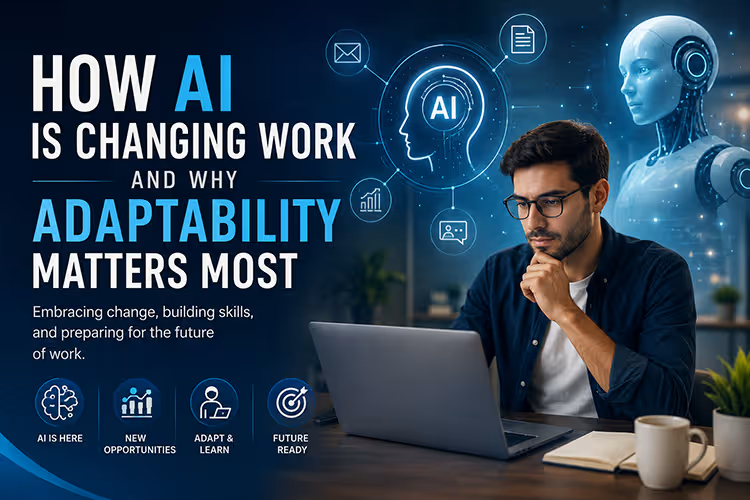
A few years ago, Artificial Intelligence (AI) felt like something that belonged in science fiction movies, technology conferences, or discussions about the distant future. Most people heard about it occasionally but rarely thought it would affect their daily lives. Today, that situation has changed completely.
AI is no longer a futuristic concept. It is now part of everyday work. It helps write emails, create presentations, summarize reports, analyze data, generate ideas, and automate repetitive tasks. What once took hours can often be completed in minutes. As AI becomes more common in workplaces around the world, one question continues to surface: “Will AI take my job?”
Why AI Has Become a Workplace Conversation
This question reflects both curiosity and concern. Some people see AI as an exciting opportunity, while others view it as a threat to their careers. The reality is that nobody knows exactly how the future will unfold, but one thing is certain—AI is changing the way we work.
The first time many employees encounter AI tools, their reactions are often mixed. Imagine discovering software that can complete a report in five minutes that previously required several hours of effort. While the efficiency is impressive, it naturally raises concerns about job security.
Employees begin wondering whether companies will need fewer workers, which jobs are most at risk, what skills will remain valuable, and how they can stay relevant in the future. These concerns are understandable because every major technological advancement has created uncertainty.
When computers entered offices, people worried. When the internet transformed businesses, people worried. When smartphones changed communication, people worried. Technology has always disrupted traditional ways of working. Yet history shows that while some jobs disappear, new opportunities often emerge.
Why This Technological Shift Feels Different
AI feels different because of its speed. Unlike previous innovations that took years or decades to become widespread, AI adoption is happening rapidly. New tools appear almost every month, and businesses are eager to improve efficiency and reduce repetitive work.
Today AI can draft professional emails, generate marketing content, analyze large datasets, summarize lengthy documents, assist with coding, create images and designs, and support customer service operations. For businesses, these capabilities offer significant advantages. For employees, they can create uncertainty.
The concern isn’t simply that technology is changing work. The concern is whether technology can perform tasks that were previously considered uniquely human.
Are We Asking the Wrong Question?
Instead of asking, “Can AI replace me?”, perhaps a better question is: “What can humans do that AI cannot?”
The answer reveals why people remain essential in the workplace. AI can process information quickly, recognize patterns, and generate content. However, AI still struggles with many deeply human qualities that drive successful businesses and relationships.
Trust remains one of the most valuable business assets. Clients, customers, employees, and business partners often make decisions based on relationships, credibility, and confidence. Trust cannot be automated.
Empathy is equally important. Understanding emotions requires more than analyzing data. A manager supporting a struggling employee or a customer service representative calming an upset customer relies on emotional intelligence and genuine human connection.
Judgment also plays a critical role. Business decisions often involve uncertainty, ethics, long-term consequences, and context. AI can provide recommendations, but final judgment still belongs to people.
Creativity and innovation continue to be powerful human strengths. AI can generate ideas based on existing information, but breakthrough innovation often comes from human imagination, curiosity, and experience.
The Professionals Thriving in the AI Era
Interestingly, the professionals adapting most successfully aren’t necessarily technology experts. They are often the people who remain curious and open-minded. Instead of resisting change, they are learning how to use AI effectively.
They understand that AI works best as a tool rather than a replacement. Successful professionals today are experimenting with new technologies, learning new skills regularly, improving productivity using AI tools, focusing on uniquely human strengths, and staying flexible as industries evolve.
The goal isn’t to compete against AI. The goal is to work alongside it. Those who embrace this mindset are often finding new opportunities rather than fearing change.
The Rise of Remote and Hybrid Work
AI is not the only trend reshaping modern work. Remote work and hybrid work models have become increasingly common across many industries. Today, millions of professionals work from home offices, apartments, co-working spaces, shared accommodations, and temporary housing arrangements.
As a result, home has become more than just a place to sleep. For many people, it has become a workspace, meeting room, brainstorming area, and productivity hub. This shift has changed how people think about their living environments.
Why Workspaces Matter More Than Ever
Productivity isn’t determined solely by talent or effort. The environment people work in also plays a major role. A comfortable and organized workspace can help improve focus, creativity, motivation, efficiency, and overall well-being.
Even small improvements such as an ergonomic chair, functional desk, or better room organization can make daily work more comfortable. As careers become increasingly flexible, people are looking for living arrangements that support changing professional needs.
Flexibility Is Becoming a Lifestyle Choice
Modern careers often involve frequent changes. People relocate for new jobs, switch industries, work remotely, and travel while working. Because of this, flexibility has become one of the most important priorities for young professionals.
Rather than making large commitments immediately, many individuals prefer solutions that adapt to changing circumstances. This trend extends beyond employment and into housing, transportation, and home furnishings.
For example, furniture rental has become an increasingly practical option for professionals seeking convenience and flexibility. The appeal isn’t simply affordability. It’s adaptability. As careers evolve, people want living spaces that can evolve alongside them.
What the Future of Work Might Look Like
Nobody can predict exactly what the workplace will look like ten years from now. However, several trends seem likely. AI tools will become more advanced, automation will increase across industries, digital collaboration will continue growing, new job categories will emerge, and lifelong learning will become essential.
The most valuable employees may not be those who know the most today. Instead, they may be the people who learn the fastest tomorrow. Adaptability is becoming a competitive advantage.
The Most Important Lesson AI Is Teaching Us
AI is often discussed as a technology story. But perhaps it is really a human story. Throughout history, people have repeatedly adapted to change. We adapted to industrialization, computers, and the internet. Now we are adapting to AI.
The future belongs neither to those who fear technology nor to those who blindly depend on it. It belongs to those who learn, evolve, and remain open to new possibilities.
AI will continue changing workplaces. New tools will arrive. Old methods will disappear. But the ability to adapt, learn, and grow remains uniquely human. And that may prove to be the most valuable skill of all.
Final Thoughts
AI is transforming the modern workplace faster than many people expected. While concerns about automation are understandable, history suggests that adaptation often creates new opportunities.
Rather than focusing solely on what technology can do, professionals should focus on strengthening the qualities that make humans irreplaceable—creativity, empathy, trust, leadership, and judgment. The future of work will undoubtedly look different. But for those willing to learn and adapt, it can also be full of exciting possibilities.