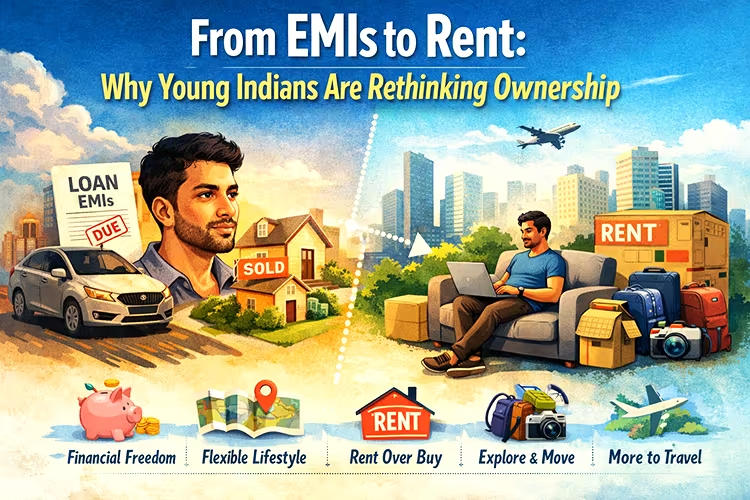
When Rohan signed the loan papers for his first big purchase, he felt proud. It was a milestone — the kind that once defined success.
An EMI deducted every month. Ownership stamped on paper. Stability, or so he believed.
Three years later, Rohan was in a different city, a different job, and a different phase of life — still paying for something that no longer fit where he was going.
The Promise of Ownership
For decades, ownership was the goal. Buy a house. Buy furniture. Lock everything in. EMIs were seen as proof of progress — a sign that life was “on track.”
Rohan grew up watching this model. It worked in a time when careers were linear, cities were permanent, and life followed a predictable path. But his reality looked very different.
When Life Moves Faster Than EMIs
Rohan’s career didn’t move in straight lines. Opportunities came from new cities. Roles changed faster than expected. Flexibility became more valuable than certainty. Yet, his EMIs stayed the same — month after month — for things he wasn’t even using anymore. Ownership, once comforting, began to feel heavy.
A Quiet Shift in Thinking
When Rohan moved into his rented apartment in Delhi NCR, he made a different decision. This time, he didn’t want to own everything.
He wanted to use what made sense for now. A bed that supported his routine. A sofa that fit his space. Appliances that made daily life smoother — without long-term financial commitments.
The idea was simple:
Why pay for permanence when life itself is temporary?
Paying Rent, Gaining Control
Choosing rent over ownership wasn’t about cutting corners.
It was about:
- Keeping savings liquid
- Reducing financial pressure
- Staying flexible for future opportunities
For Rohan, paying rent meant control — over money, over mobility, over choices. Instead of being tied down by EMIs, he could adapt his lifestyle as life changed.
A Generational Rethink
Rohan’s mindset reflects a larger shift across young India.
Today’s generation:
- Changes jobs more often
- Moves cities with ease
- Values experiences over assets
They’re not rejecting ownership — they’re postponing it intentionally.
Comfort matters. Stability matters. But not at the cost of flexibility.
Ownership Isn’t Gone, It’s Redefined
This isn’t a story about giving up on dreams.
It’s about timing. Young Indians aren’t saying no to ownership forever.
They’re saying not yet — choosing to build careers, explore cities, and live fully before committing long-term.
Until then, smarter living means lighter commitments.
The New Definition of Progress
For Rohan, progress no longer means accumulating things.
It means:
- Financial freedom
- Lifestyle flexibility
- A home that supports his present, not traps his future
Paying rent gave him something EMIs couldn’t — choice. And for a generation living life in fast-moving chapters, that choice makes all the difference.
Frequently Asked Questions About Renting vs Ownership
Many young professionals prefer renting for flexibility, lower upfront costs, and the freedom to move cities without long-term financial pressure.
It depends on lifestyle and goals. Renting can reduce EMIs, maintenance costs, and large investments, helping maintain liquidity.
Yes. Furniture rental avoids heavy upfront spending and allows upgrades as needs or living spaces change.
Ownership remains valuable, but many young adults are postponing it until their careers and locations stabilize.
Renting makes relocation easier, allowing professionals to accept new job opportunities without asset burdens.
Maintenance, repairs, interest payments, and depreciation can add significant long-term expenses.
Modern rental services provide stylish, high-quality furniture and appliances that match owned products.
Renting works for both. Families benefit from flexibility during transitional life stages.
Savings from renting can be invested elsewhere, potentially supporting wealth growth.
Many plan to own in the future, but they prioritize flexibility and experience during early career years.